




So… you’ve finished the TMB. What’s next?
You’ve circled Mont Blanc. Crossed the mountain passes, earned the café stops and talked the ear off anyone who paused long enough to listen to your adventure.
So where do you walk after the Tour du Mont Blanc? For most people, finishing it isn’t the end of anything. It’s the start. Once you’ve had a taste of crossing the Alps on foot – valley to pass to village – it’s hard not to want another go.

The good news? The Alps are full of trails that build on the TMB. Some are tougher. Some are quieter. Some swap glaciers for lakes, or huts for a four-star hotel with a sauna.
Below are nine self-guided walking holidays we’d point any TMB walker towards. We’ve compared each one with the TMB on the things that matter once you’re on the trail – difficulty, terrain, where you sleep and whether your luggage goes on ahead. Macs Adventure has been arranging Alpine walking holidays for decades, so every detail comes straight from our own itineraries.
Short on time? Start with the comparison table, then jump to the trips that fit.
|
Trip |
Where |
Days |
Distance |
Grade |
Where you sleep |
Luggage transfers |
Season |
|
Complete Tour du Mont Blanc in Comfort (benchmark) |
France, Italy, Switzerland |
12 |
162 km / 99 miles |
Tough |
Hotels and inns |
Yes |
July–Sept |
|
Austria |
7 |
74 km / 45 miles |
Moderate |
4* hotels |
Every day |
June–Sept |
|
|
Austria |
8 |
81 km / 51 miles |
Moderate to strenuous |
3–4* hotels + 2 huts |
Except hut nights |
June–Sept |
|
|
France, Switzerland |
8 |
94 km / 58 miles |
Moderate to strenuous |
3* hotels + 2 huts |
Yes |
June–Aug |
|
|
Italy |
10 |
87 km / 54 miles |
Moderate to strenuous |
2 hotels + 7 rifugi (dorms) |
Start to finish only – you carry your pack |
July–Sept |
|
|
Highlights of the Alta Via 1 in Comfort (hotel-based alternative to the AV1 Classic) |
Italy |
9 |
91 km / 57.5 miles |
Moderate |
Hotels (private en-suite rooms) |
Every day |
Late June–early Sept |
|
Switzerland |
18 |
291.5 km / 181 miles |
Moderate to strenuous |
3* and mountain hotels |
Every day |
July–Sept |
|
|
Slovenia |
8 |
73 km / 46 miles |
Strenuous |
3–4* hotels + 3 huts (dorms) |
Except hut nights |
July–Sept |
|
|
Switzerland |
8 |
100 km / 62 miles |
Strenuous |
Hotels, guesthouses + 1 hut |
Except the hut night |
July–Sept |
|
|
France, Switzerland |
15 |
195 km / 120 miles |
Strenuous |
Hotels, auberges + 3 refuges |
None – you carry your pack |
July–Sept |
|
|
Germany, Austria, Italy |
8 |
80 km / 50 miles |
Extreme |
3* hotels + 1 hut (private room) |
3 of 6 walking days |
July–Sept |
For a Gentler Follow-up
The Kitzbühel Alpine Trail
Austria · 7 days · 74 km · Moderate
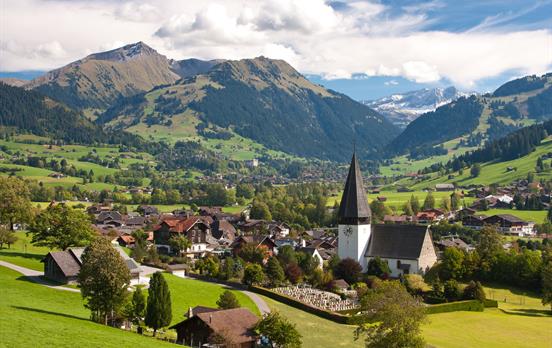
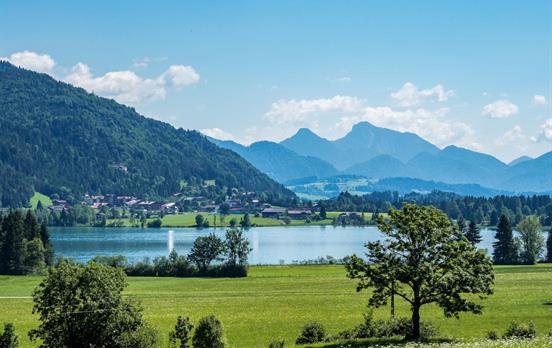
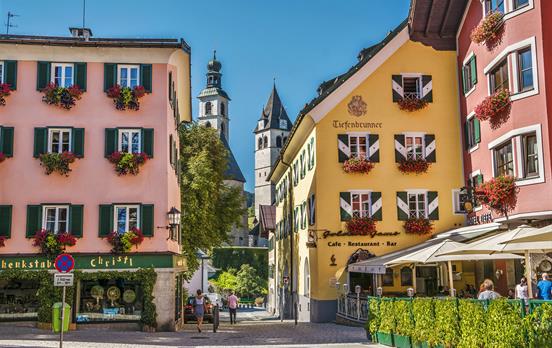
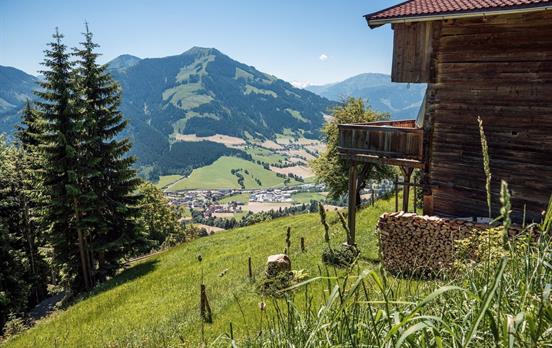
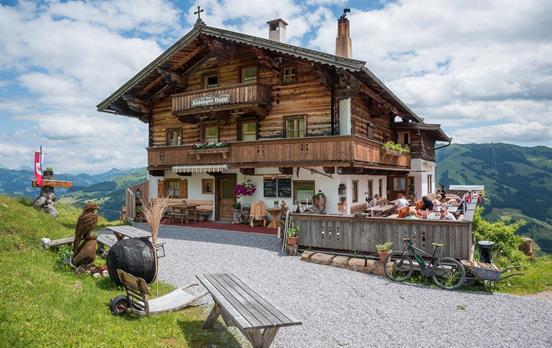
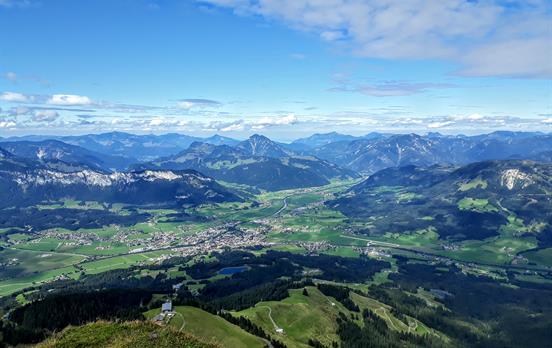
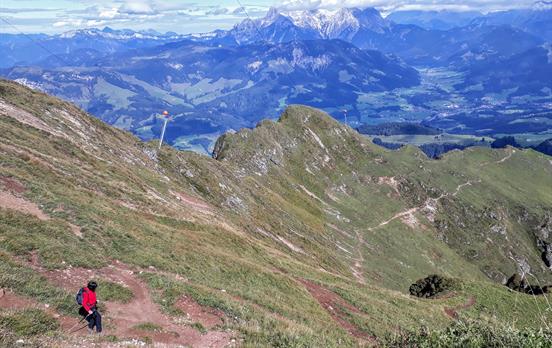
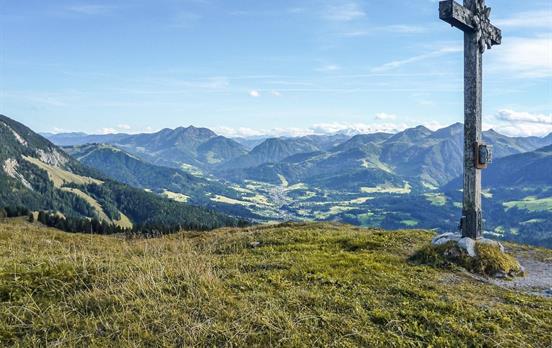
This follows the best section of the KAT Walk through the Kitzbühel Alps, from Hopfgarten to St. Ulrich am Pillersee. It’s green, rolling country – broad ridgelines, limestone plateaus and Alpine meadows rather than glaciers. The high point is Kitzbüheler Horn (1,996m), with views across the Tyrol. Every night is in a four-star hotel with a small wellness area, so the sauna is never far away.
How it compares to the TMB
- Difficulty: Easier. It’s graded moderate, with around 800m of ascent and descent on an average day.
- Terrain: Well-waymarked paths, from wide tracks to a few steep, narrow sections where you’ll want sure feet.
- Where you sleep: 4* hotels every night.
- Luggage transfers: Every day.
- Best time: June to September.
- Solo walkers: Welcome, if you’re experienced.
Big views without the big days. A good pick if the TMB left your knees asking for a rest.
See the Kitzbühel Alpine Trail itinerary >

Highlights of the Alta Via 1 in Comfort
Italy · 9 days · 91 km · Moderate
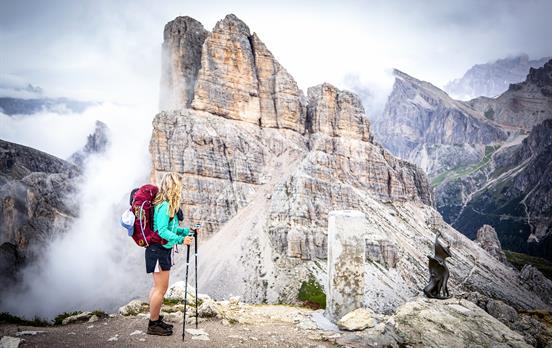
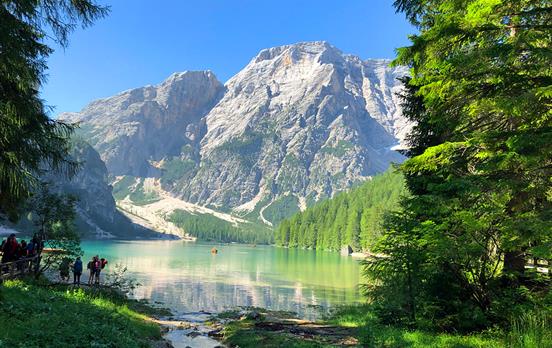
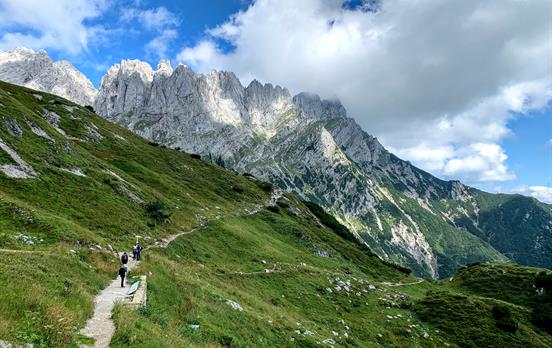
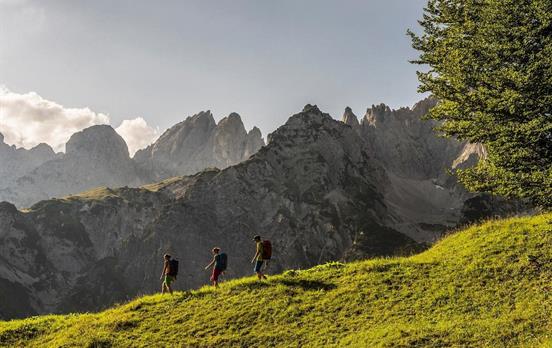
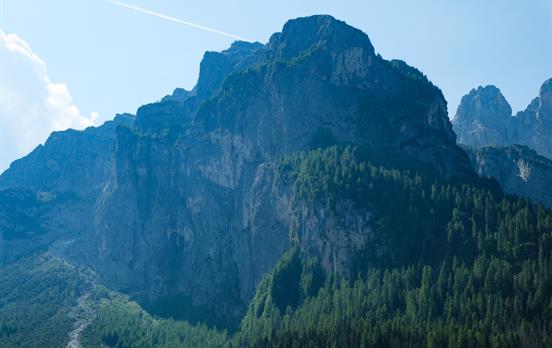
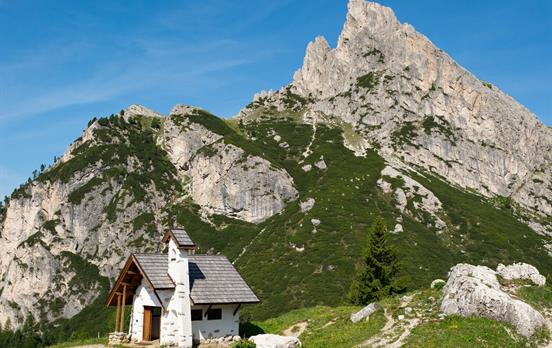
All the drama of the Dolomites' most famous trail, without a single night in a dorm. You start at Lago di Braies, the official start of the Alta Via 1, then walk its highlights through the Fanes-Sennes-Braies Nature Park and up to Rifugio Lagazuoi, passing traces of the First World War on the way. Rather than moving on every day, you spend two nights each in St. Vigil, St. Kassian and Alleghe, with Cortina at both ends.
How it compares to the TMB
- Difficulty: Easier overall. It's graded moderate, with walks of 8–19km and up to 1,131m of ascent. The last walking day is the toughest, with a 1,600m descent.
- Terrain: Footpaths and narrow mountain tracks up to 2,700m, with steep, exposed stretches and sheer drops in places. You'll need a head for heights, so it's not one for vertigo.
- Where you sleep: Private en-suite rooms in hand-picked 3* and 4* hotels, several with wellness areas.
- Luggage transfers: Every day.
- Best time: Late June to early September.
- Solo walkers: Not available, due to the terrain.
The Alta Via 1's big views with your own room every night. Three of the days are optional loop walks, so you can take a rest day whenever your legs ask for one.
See the Highlights of the Alta Via 1 in Comfort itinerary >

Tyrol: Trails of the Wilder Kaiser
Austria · 8 days · 81 km · Moderate to strenuous
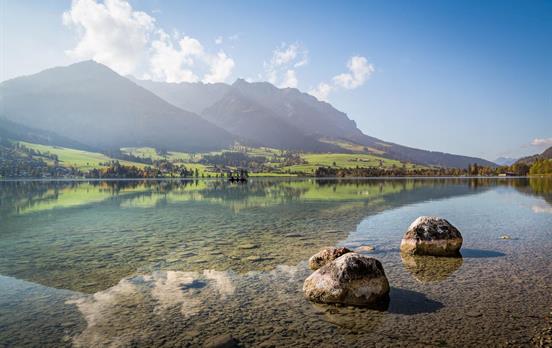
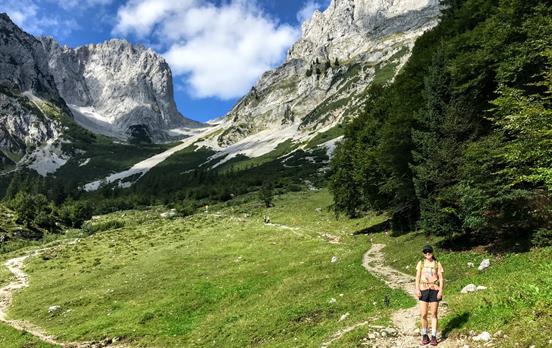
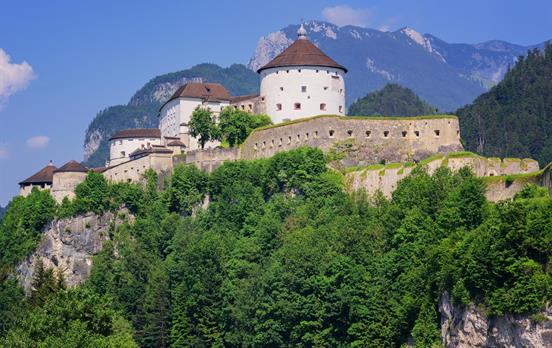
A week around Austria’s Kaiser mountains – the jagged Wilder Kaiser (“wild emperor”) and the gentler Zahmer Kaiser (“tame emperor”). You start in Kufstein, with its fortress and cobbled streets, and follow sections of the Eagle’s Way to the baroque town of St. Johann and on to Walchsee. Two nights are spent up high, at the Gaudeamushütte and Stripsenjochhaus.
How it compares to the TMB
- Difficulty: Similar in places, shorter overall. Days run 10–16km with 540–1,100m of ascent.
- Terrain: Woodland trails, rocky mountain paths, boulder-strewn stretches and faint grassy tracks. A few sections use cables and handrails, with an alternative route if you’d rather skip them.
- Where you sleep: 3–4* hotels and guesthouses, plus two mountain huts. We book private hut rooms with en suites wherever we can.
- Luggage transfers: Every day except the two hut nights, when you carry a small overnight bag.
- Best time: June to September.
A good balance of hut nights and hotel comfort, on a smaller scale than the TMB.
See the Trails of the Wilder Kaiser itinerary >

For the TMB Rhythm, with Fewer People
The GR5: Lake Geneva to Chamonix
France and Switzerland · 8 days · 94 km · Moderate to strenuous
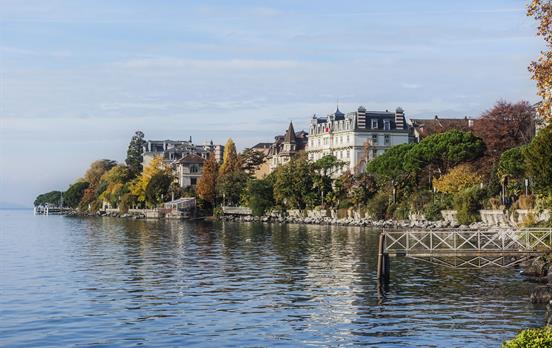
The GR5 runs the length of the French Alps, and this first Alpine section finishes in Chamonix – home turf for any TMB walker. You start on Lake Geneva in Montreux, cross to the French side at Novel and weave across the border past the Dents Blanches and Dents du Midi. The last day ends on Le Brévent (2,525m), face to face with the Mont Blanc massif, before a cable car drops you into town.
How it compares to the TMB
- Difficulty: Similar. Days average 18km with significant ascent, and the longest is 26km.
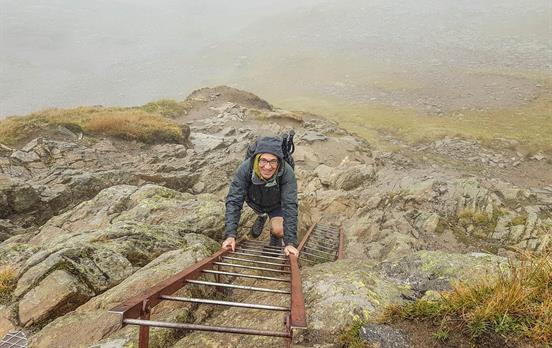
- Terrain: Woodland trails, rocky mountain paths and gravel tracks. The climb to Le Brévent has light scrambling and two short metal ladders.
- Where you sleep: Five nights in 3* hotels, one in a private room in a mountain hut and one in a mixed dorm.
- Luggage transfers: Included.
- Best time: June to August.
- Bonus: A free day in Chamonix at the end.
The same rhythm as the TMB, with fewer people – and a final view back across the mountain you’ve already walked around.
See the GR5: Lake Geneva to Chamonix itinerary >

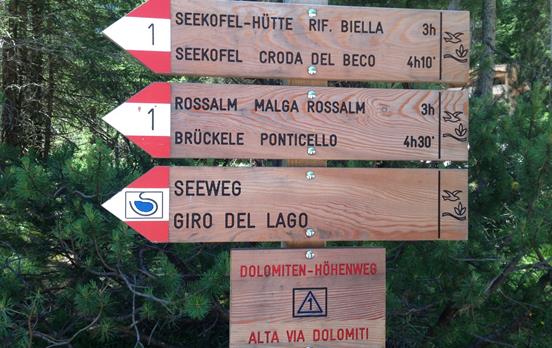
Dolomites Alta Via 1 Classic
Italy · 10 days · 87 km · Moderate to strenuous
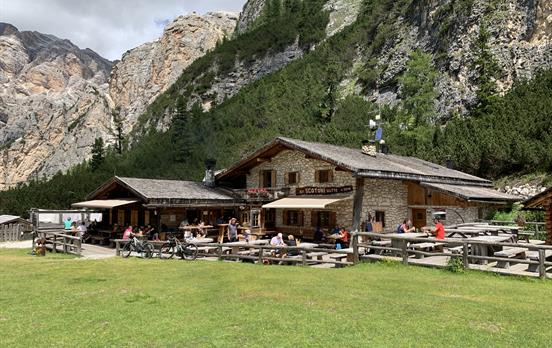
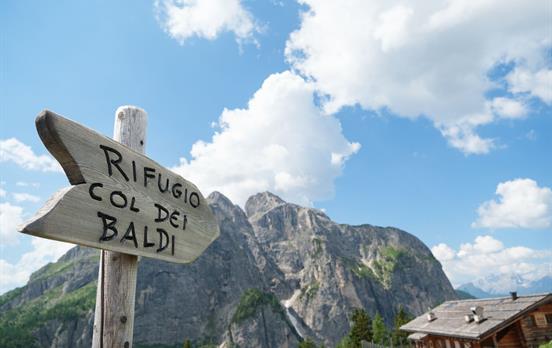
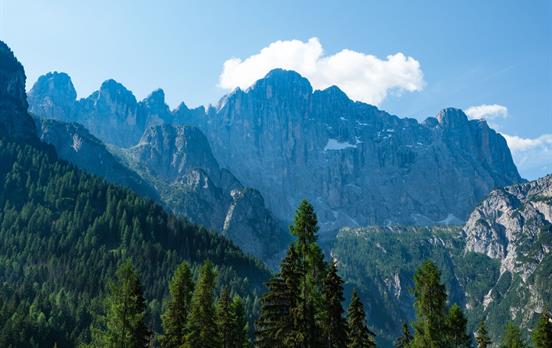
Italy’s best-known hut-to-hut route runs south through the Dolomites from Lago di Braies to Belluno. Glaciers give way to pale limestone towers, scree slopes and green valleys. You’ll stay at rifugi such as Lagazuoi, Croda da Lago and Coldai, with hotel nights in Cortina at the start and Belluno at the end.
How it compares to the TMB
- Difficulty: A step up. Days are shorter (8–17km), but ascents reach 1,100m and descents 1,700m. Some steep, exposed sections are secured with ropes, so it’s not one for vertigo.
- Terrain: Switchback paths, scree, narrow tracks and rough mountain ground.
- Where you sleep: 3* hotels in Cortina and Belluno, and seven nights in rifugi (mixed dorms).
- Luggage transfers: Your main bag goes from Cortina to Belluno. Between huts, you carry your own pack.
- Best time: July to September.
If the hut nights were your favourite part of the TMB, this is your natural next step. Less hotel, more camaraderie – and better pasta.
See the Dolomites Alta Via 1 Classic itinerary >
Read our TMB vs Alta Via 1 comparison >

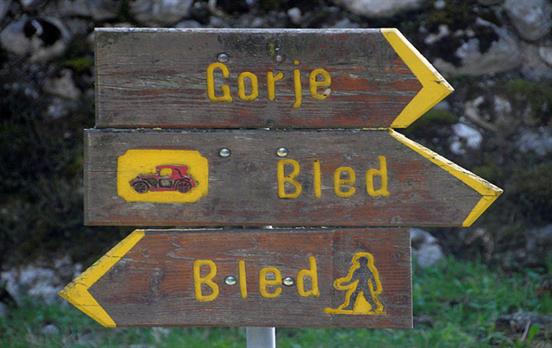
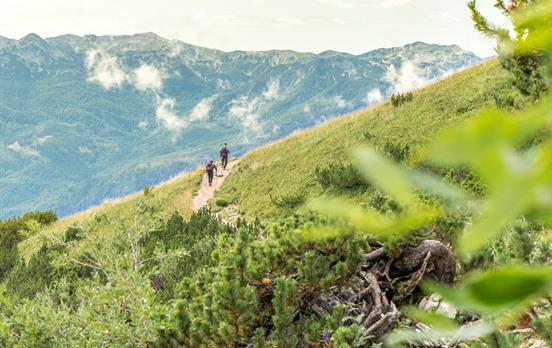
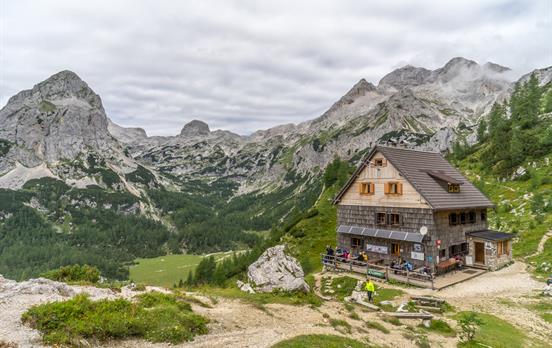
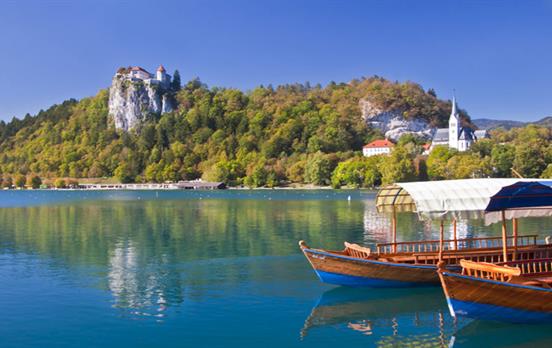
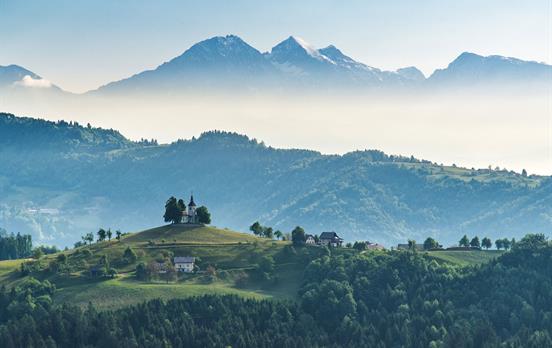
High Trails of the Julian Alps
Slovenia · 8 days · 73 km · Strenuous
A quieter corner of the Alps. You start at Lake Bled, climb onto the Pokljuka plateau and then go hut to hut through Triglav National Park, beneath Mount Triglav (2,864m), Slovenia’s highest peak. The route drops past the Valley of the Triglav Lakes and the 78m Savica waterfall to finish on the shore of Lake Bohinj.
How it compares to the TMB
- Difficulty: Similar or harder. It’s graded strenuous, with daily walks of 8–15km and ascents of up to 1,300m.
- Terrain: Rugged mountain paths – less manicured than in France or Switzerland – with steep, exposed stretches and one short via ferrata section (about 10m) along a ledge.
- Where you sleep: Four nights in 3–4* hotels and three in mountain huts (dorms).
- Luggage transfers: Between hotels. On hut nights, you carry a day pack with your overnight things.
- Best time: July to September.
Alpine scenery with a fraction of the crowds, and a lake at each end of the walk.
See the High Trails of the Julian Alps itinerary >

For a Bigger Challenge
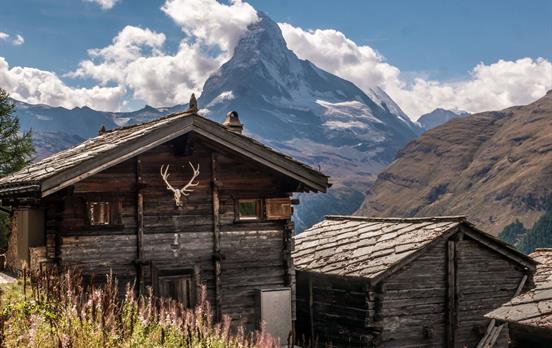
High Trail to the Matterhorn
Switzerland · 8 days · 100 km · Strenuous
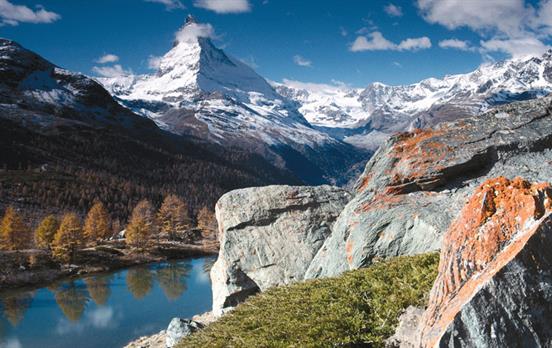
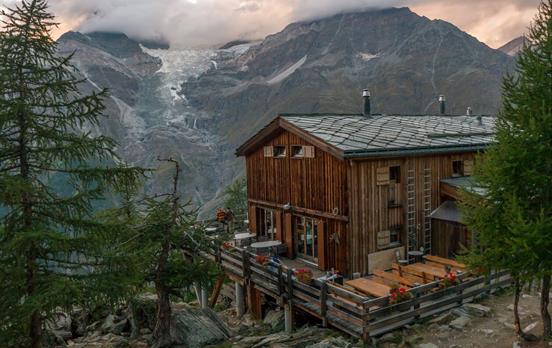
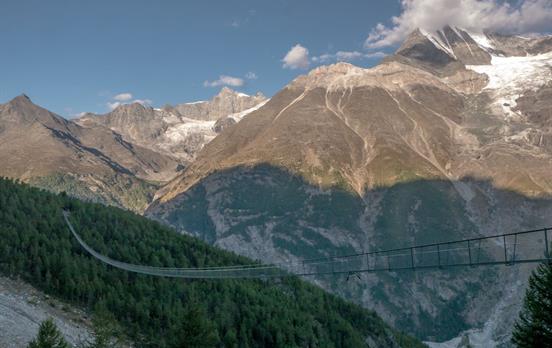
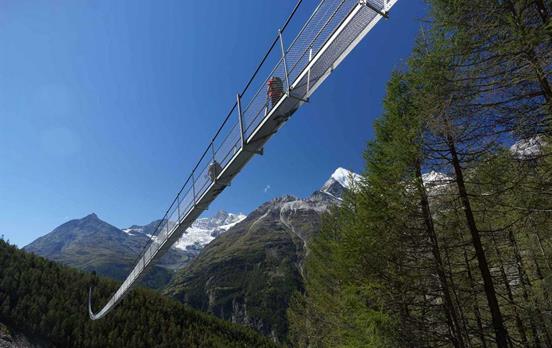
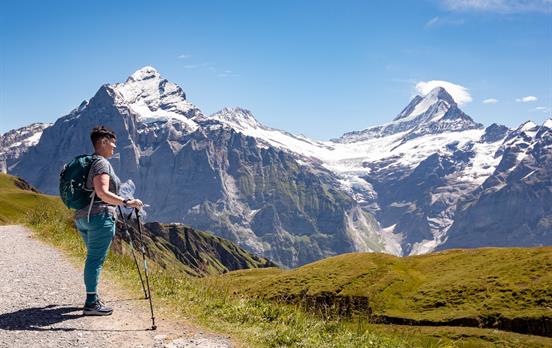
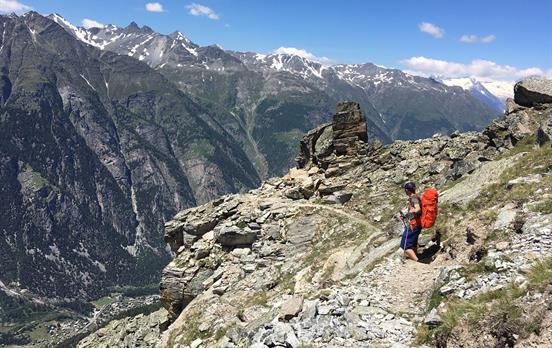
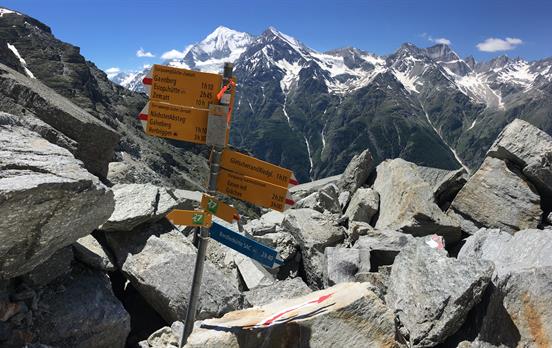
Walk south from Brig to Zermatt through the Valais, home to the Alps’ greatest collection of 4,000m peaks. From the Simplon Pass you head to Visperterminen, then Saas-Fee for a free day, before Grächen, a night at the Europahütte and the final stretch into Zermatt with the Matterhorn ahead. The last day can include the Charles Kuonen bridge – at around 494m.
How it compares to the TMB
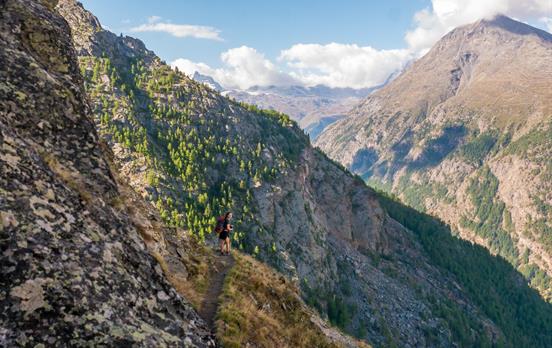
- Difficulty: Harder. Days typically last 6–7 hours on steep ground, with fixed ropes and handrails on the trickiest passages.
- Terrain: Mountainous, exposed and rocky throughout. Parts of the Europaweg have closed over the years after rockfall, so you may follow alternative routes or use local transport around them.
- Where you sleep: Hotels and family-run guesthouses, plus one night at the Europahütte.
- Luggage transfers: Every day except the Europahütte night.
- Best time: July to September.
The TMB’s more ambitious sibling – shorter, but steeper and more exposed.
See the High Trail to the Matterhorn itinerary >

The E5 Alpine Crossing
Germany, Austria and Italy · 8 days · 80 km · Extreme
The classic north-to-south crossing of the Alps, from Oberstdorf in Bavaria, through the Austrian Tyrol, to the Merano area in South Tyrol. Three countries in a week. Our itinerary is planned to avoid the busiest stretches, and one night is at the Bellavista hut – in a private room, with an outdoor sauna and jacuzzi.
How it compares to the TMB
- Difficulty: Harder. We grade it extreme: 6–9 hour days, 1,000–1,500m of ascent or descent on average and a high point of 2,995m.
- Terrain: Scree, rock and exposed high pasture, with fixed ropes in places. Expect patches of snow, even in midsummer.
- Where you sleep: 3* hotels and guesthouses, plus one night at the Bellavista hut.
- Luggage transfers: On three of the six walking days. On the others, you carry what you need for the night.
- Best time: July to September.
The same sense of achievement as the TMB, with tougher days to earn it.
See the E5 Alpine Crossing itinerary >

Walker’s Haute Route
France and Switzerland · 15 days · 195 km · Strenuous
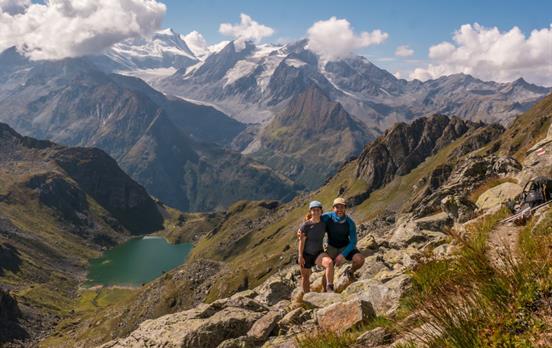
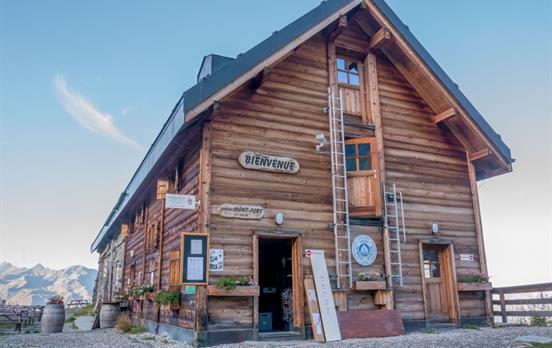
Chamonix to Zermatt – Mont Blanc to the Matterhorn – through the Pennine Alps. The route stays below 3,000m and needs no climbing kit, but it’s the biggest undertaking here: roughly 12,000m of ascent over 13 walking days. Along the way you’ll pass Champex, Cabane du Mont Fort, Arolla and Zinal before the Europa Hut and the walk into Zermatt.
How it compares to the TMB
- Difficulty: Significantly harder. Walking days run 10–19km over high passes, with fixed ropes and handrails on the trickiest sections.
- Terrain: Exposed, rocky and rough, with large snowfields on the highest passes early and late in the season.
- Skills: You’ll need previous high-mountain experience and good navigation, as the weather up high can turn quickly.
- Where you sleep: Nine nights in 2–3* hotels, two in auberges (private rooms) and three in mountain refuges (dorms).
- Luggage transfers: None. The overnight stops are too remote, so you carry your pack every day.
- Best time: July to September. Not available to solo walkers.
- Shorter options: Walk the Walker’s Haute Route West (Chamonix to Arolla, 8 days) or East (Arolla to Zermatt, 9 days).
If the TMB felt like a challenge, this is the next level.
See the Walker’s Haute Route itinerary >

For the Long Haul
The Via Alpina
Switzerland · 18 days · 291.5 km · Moderate to strenuous
Cross Switzerland on foot, from near the Liechtenstein border to Lake Geneva. You’ll cross 14 Alpine passes and six cantons, walk beneath the Eiger, Mönch and Jungfrau, and stay in Engelberg, Grindelwald, Kandersteg and Gstaad before finishing in Montreux.
How it compares to the TMB
- Difficulty: Similar day to day – it just keeps going. You’ll average 18km and about 1,000m of ascent a day, though most days can be shortened with public transport.
- Terrain: Woodland, grassy paths, moraine, scree and rocky mountain trails, with light scrambling and cables in places. Walking poles are essential.
- Where you sleep: 14 nights in 3* hotels and three in mountain hotels, always in private rooms.
- Luggage transfers: Every day.
- Best time: July to September. Not available to solo walkers.
- Shorter options: Walk the Via Alpina East (Zürich to Grindelwald) or Via Alpina West (Grindelwald to Montreux), 10 days each.
For walkers who loved the journey of the TMB more than the finish line. Fewer crowds, more country.
See the Via Alpina itinerary >

More Alpine Ideas
Not quite seeing your next trip yet? These walking holidays are worth a look too.
- French Alps walking holidays: classic Alpine scenery at a gentler, more flexible pace.
- Bavarian Alps walking holidays: lakes, forest trails and lower altitudes, with a longer season than the TMB.
- Via Francigena: a historic pilgrim route over the Alps. Less about peaks, more about purpose.
Which trip after the TMB is right for you?
- You want an easier week: the Kitzbühel Alpine Trail.
- You loved the huts: Dolomites Alta Via 1 Classic or High Trails of the Julian Alps.
- You want hotels and hut nights in one trip: Trails of the Wilder Kaiser or the GR5.
- You want fewer people: High Trails of the Julian Alps or the Via Alpina.
- You want a bigger challenge: High Trail to the Matterhorn or the E5 Alpine Crossing.
- You want the next level: Walker’s Haute Route.
- You’ve got two and a half weeks: the Via Alpina.
Still torn? Our Alpine walking specialists know these routes inside out. Give us a call on +44 141 530 8886, and we’ll help you choose.

Where Will the Trail Take You Next?
The Tour du Mont Blanc sets a high bar, but it also opens the door to a lifetime of walking adventures.
Whether you’re chasing bigger mountains, quieter trails, or something entirely different, there’s always another path waiting.

Why Choose a Macs Adventure Self-Guided Walking Trip?
Because your adventure should feel seamless every time.
With Macs Adventure, you get:
- Expertly designed itineraries that build on your TMB experience
- Hand-picked accommodation full of character and comfort
- Luggage transfers, so you can walk light
- Turn-by-turn GPS navigation via our award-winning app
- 24/7 support, whenever you need it
All the freedom of independent travel, with none of the hassle.
You’ve done the TMB.
Now it’s time to decide: do you go higher, further… or simply somewhere new?

People Also Ask
- Guide to walking the Tour du Mont Blanc
Everything you need to plan your TMB adventure, from route options and highlights to daily distances and logistics.
Read our full guide to walking the Tour du Mont Blanc > - Weather conditions on the TMB
Expect changeable alpine weather-warm valley days, cooler mountain passes, and the occasional surprise shower.
Learn more about weather conditions on the TMB > - How fit do I need to be to walk the TMB?
A good level of fitness helps, as you’ll be walking 6–8 hours a day with regular ascents and descents.
Find out how fit you need to be for the TMB > - How to get to the start of the TMB
Most routes begin in Chamonix, which is easily reached via Geneva Airport and a straightforward transfer.
See our guide on how to get to the start of the TMB > - TMB packing list
Think light layers, waterproofs, sturdy boots, and a few hut essentials-packing smart makes all the difference.
Check out our full TMB packing list >
- What to eat and drink on the TMB
Refuel with hearty alpine meals, local cheeses, fresh bread, and the occasional well-earned beer or glass of wine.
Discover what to eat and drink on the TMB > - Top tips for walking the TMB
Start early, pace yourself, pack light, and don’t forget to look up-the views are kind of the point.
Read our top tips for walking the TMB > - TMB FAQs
Got questions? From luggage transfers to route variations, our FAQs cover the details that make planning easier.
Browse our full TMB FAQs > - TMB vs. Alta Via 1
Both offer spectacular alpine scenery, but the Alta Via 1 is quieter and more rugged, while the TMB is more social and well-established.
Compare the TMB vs. Alta Via 1 > - Mountain Hut guide – what’s it like to stay in a mountain hut?
From shared dorms to communal dinners, here’s what to expect when staying in alpine mountain huts along the trail.
Read our full mountain hut guide >






















 Australia
 New Zealand
 South Africa
 European Union